Culture & Fashion
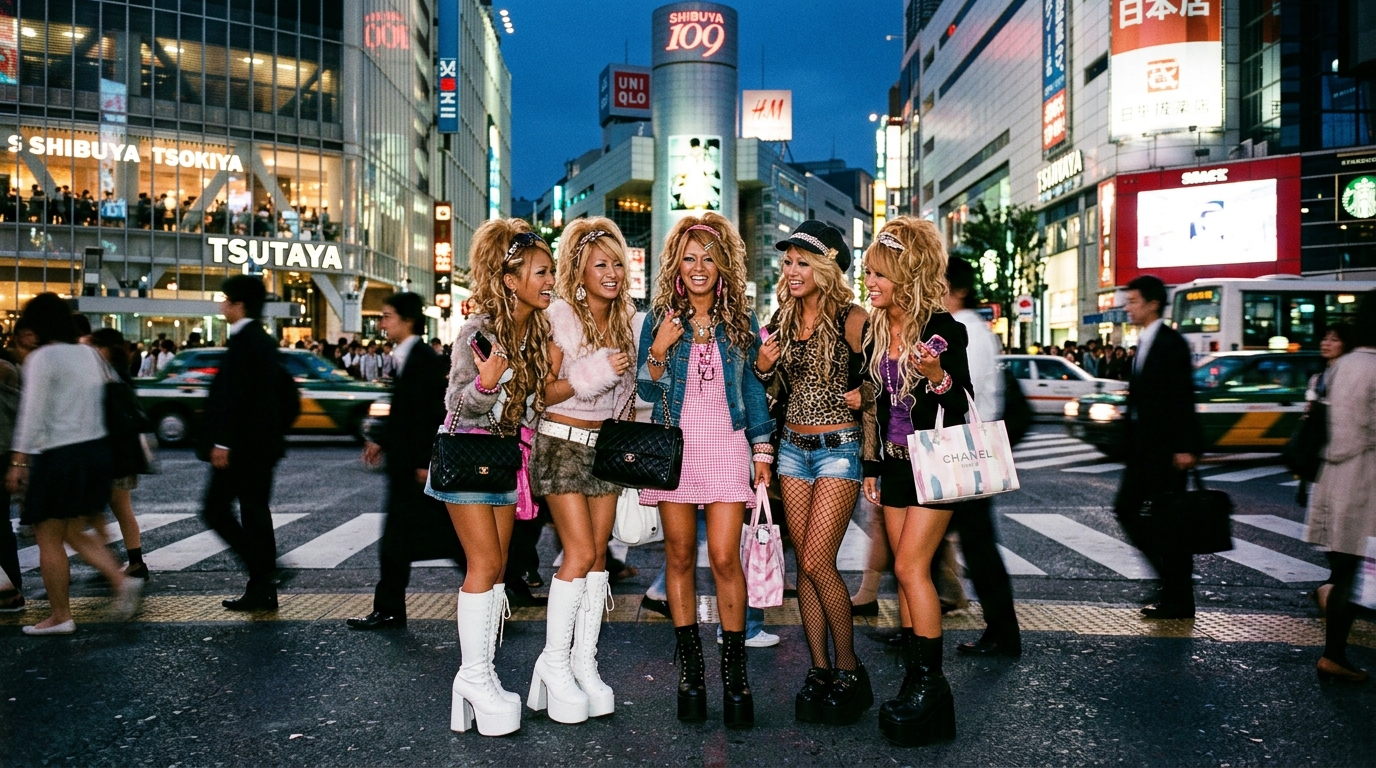
Gyaru Fashion Master Guide
The complete cultural overview of Japanese Gyaru fashion, foundational aesthetics, iconic Shibuya landmarks, and philosophy.
Editorial Guide
Read Guide →
Learn gyaru makeup step by step, including tareme and tsurime eyeliner, upper and lower lashes, contouring, beginner products and substyle looks.
In Japanese street fashion, Gyaru Makeup (ギャルメイク, gyaru meiku) is an architectural discipline that sculpts facial contours and reshapes eye dimensions using light, shadow, and layered lashes. Born as a radical act of self-expression in Tokyo's Shibuya district, this cosmetic philosophy challenged conservative Japanese beauty standards by transforming the face into an unapologetic canvas of confidence, individuality, and theatrical glamour.
At its cultural core, gyaru makeup (ギャルメイク) represents a conscious subversion of traditional Japanese feminine ideals. Historically, conventional Japanese aesthetics emphasized subtle modesty, porcelain perfection without overt artifice, and demure restraint. When the gyaru subculture emerged in the 1990s, young women deliberately weaponized cosmetics to reject societal expectations of compliance and domestic conformity.
Central to this philosophy is the concept of me-make (目メイク), an intensive methodology dedicated to optical eye enlargement and structural transformation. Gyaru eye makeup does not merely accent the eye; it constructs an entirely new perimeter. Through the calculated interplay of dark liquid eyeliners, bright waterline shading, multi-tiered false eyelashes (tsukematsuge), and facial contouring, gyaru artisans physically expand the visible ocular socket.
Over the decades, the look has continually evolved across cultural eras:
While cosmetic choices vary dramatically depending on whether an individual wears beach-inspired Ganguro, princess-like Hime Gyaru, or sharp Rokku Gyaru, several universal signatures define authentic gyaru aesthetics:
Deep carbon black liquid or gel eyeliner extends well beyond the natural corner of the eye. Rather than tracing the lash line passively, the liner dictates the eye's shape, steering it into either a gentle downward droop (tareme) or a sharp upward sweep (tsurime).
Upper lashes provide dimensional volume and flutter, while lower lashes—often individual clusters or spaced strips—are positioned intentionally below the water line to open up negative space and maximize vertical eye height.
Decorative lenses featuring pronounced outer limbal rings. By extending visually beyond the natural iris diameter, circle lenses give the wearer a mesmerizing, doll-like iris that balances the dramatic volume of false eyelashes.
Deep chocolate browns, warm taupes, and shimmery champagnes sculpt the socket. Crucially, the lower lid features namida-bukuro (涙袋, tear bag) highlighting, creating a puffy, youthful under-eye roll that makes the eye appear larger.
A signature gyaru technique where cool matte shadow runs down both sides of the nose bridge while a crisp highlight runs directly down the center (hana-suji), creating an elongated, Western-sculpted facial bone structure.
Blush is applied high on the apple of the cheek or directly under the eye socket to blend into the eye area. Lips are typically toned down with a nude base or beige-pink liner, topped with high-shine lacquer to keep focal emphasis on the eyes.
Building an authentic gyaru cosmetic arsenal does not require buying specialized Japanese vintage brands immediately. Modern drugstore and professional cosmetics provide everything needed if you choose formulas with strong pigmentation and structural hold. Below is your complete beginner starter checklist:
Controls shine and blurs skin texture to create an even, porcelain or matte canvas.
Criss-cross patterns with elongated outer corners (such as Diamond Lash or Dolly Wink styles).
A matte or satin-finish base matched to your desired substyle tone (fair, golden, or bronzed).
Spaced clusters with a transparent band, formulated specifically for floating under-eye placement.
Essential for locking under-eye concealer and keeping the nose bridge perfectly shine-free.
Clear-drying latex or acrylic adhesive (such as D-UP 552) that withstands all-day wear without lifting.
Featuring matte beige, warm camel, deep espresso, and a luminous champagne pearl shimmer.
A grey-brown shade for carving the nose bridge (hana-suji) without appearing muddy or orange.
Gel pencil for tightlining the waterline; ultra-fine brush liquid liner for razor-sharp wings.
Frosty pearl or icy champagne powder for the nose tip, brow bone, and tear-bag ridge.
Crucial for brightening the outer waterline and opening negative space beneath tareme liner.
High-pigment powder blush placed high on the cheekbones to frame and soften the eye area.
Ash-blonde, light brown, or caramel tint to soften dark brows and complement dyed hair.
A neutral beige or soft pink lipstick topped with thick, reflective gloss for a plumping effect.
Follow this comprehensive, beginner-friendly tutorial to construct a versatile gyaru look. This foundational blueprint can be calibrated toward sweet droop-eyed styles (Himekaji) or fierce nighttime aesthetics (Agejo).
Flawless makeup begins with targeted skin preparation. Cleanse thoroughly and apply a lightweight, fast-absorbing hydrating moisturizer. Avoid heavy face oils, which break down lash adhesives and cause liquid eyeliners to smudge. Apply a pore-smoothing, oil-control primer across the T-zone and eyelid primer across the upper lids and lower lash line to prevent creasing.
Apply a medium-to-full coverage liquid foundation using a damp beauty sponge or dense foundation brush, buffing outward from the center of the face. For historical tanning substyles like Kogyaru, match foundation to your self-tan; for doll-like styles like Hime Gyaru, match your natural neck tone. Apply full-coverage concealer under the eyes in an inverted triangle, covering any dark circles completely. Set the entire face with a translucent powder, paying special attention to the eyelids and under-eye area.
Gyaru brows are historically lighter than natural hair to complement bleached, highlighted, or chapatsu (brown/blonde) dyed hair. Using an ash-blonde or light caramel eyebrow pencil, define a soft arch with a tapered tail. Avoid heavy, boxy, dark brows. Comb through with a tinted eyebrow mascara (such as Kiss Me Heavy Rotation) to coat dark brow hairs in a golden or light-ash hue.
Sweep a matte beige shade across the entire eyelid up to the brow bone as a neutral base. Apply a warm medium-brown shade through the socket crease, extending outward past the eye corner to establish an expanded contour. Press a deep espresso brown into the outer third of the upper mobile lid and along the outer corner of the lower lash line. Finally, pat a shimmery champagne or pale pearl shadow directly onto the center of the upper lid and across the inner two-thirds of the lower lid to sculpt the namida-bukuro.
First, tightline the upper waterline using a waterproof black gel pencil. Next, take your black liquid eyeliner and draw a clean line along the upper lash line, starting thin at the inner corner and thickening substantially from the midpoint outward:
Curl your natural lashes and apply a light coat of waterproof mascara. Take your upper false eyelashes (tsukematsuge) and hold them against your eye to check the width; trim from the outer edge if the band exceeds your eye length. Bend the lash band into a curve to soften the spine. Apply a thin, even bead of brush-on lash glue along the band and wait 20 to 30 seconds until the adhesive turns tacky.
Place the lash band directly onto the skin immediately above your natural lash line, anchoring the center first before securing the inner and outer corners. For a tareme effect, angle the outer tip of the lash band slightly downward along your eyeliner wing rather than adhering tightly to your eye corner.
Lower lashes are what truly define gyaru eye geometry. Using individual lash clusters or a delicate clear-band lower strip cut into segments, apply adhesive to the tips. Using tweezers, adhere the lashes to the skin 1mm to 2mm beneath your natural lower waterline on the outer half of the eye. This "floating" placement opens up negative space. Once dry, fill the waterline and the negative space between your real lid and the false lashes with a white or nude pencil, creating the optical illusion of an enlarged eyeball.
If you choose to wear circle lenses, always insert them before applying eye makeup, or carefully place them using sterile, washed, and dried hands before eyeliner application. Choose an iris diameter that complements your eye scale (typically 14.0mm to 14.5mm graphic diameter). Ensure lenses are clean, properly hydrated with sterile multipurpose saline solution, and never worn if your eyes show redness or irritation.
Gyaru nose contouring (hana-suji) sculpts the center of the face. Using a small blending brush and a cool-toned matte taupe contour powder, draw two parallel vertical lines down the bridge of your nose, starting from the inner hollow of the brow bone down to the nostrils. Connect the lines under the nose tip to create a button effect. Blend thoroughly outward so no harsh edges remain. Dust a bright matte or satin highlighter straight down the center bridge and on the nose tip.
Apply blush high on the cheekbones, sweeping horizontally beneath the lower lash line to seamlessly frame the eyes. Dust highlighter across the tops of the cheekbones, Cupid's bow, and chin. For the lips, mute your natural lip line using a dab of leftover foundation or a nude lip pencil. Apply a milky beige or petal pink lipstick, then generously coat the center of the lips with clear or high-shimmer lip gloss for a plump, juicy finish.
The debate between tareme (タレ目, droop eyes) and tsurime (ツリ目, cat eyes) is one of the most defining aesthetic choices in gyaru beauty culture. Both techniques expand the visual eye area, but they construct fundamentally opposing emotional and stylistic expressions:
| Fashion Element | Tareme (Droop Eye / タレ目) | Tsurime (Cat Eye / ツリ目) |
|---|---|---|
| Core Aesthetic | Doll-like, innocent, soft, vulnerable, and wide-eyed | Fierce, seductive, nocturnal, sharp, and commanding |
| Eyeliner Trajectory | Follows upper lid downward past outer corner; leaves open triangular space | Flicks sharply upward and outward toward temple in continuous wing |
| Lower Lash Placement | Floated 1mm–3mm below water line at outer third; fills negative space with white/nude | Drawn tight against water line or slightly fanned upward to meet outer wing |
| Lash Map Density | Longest clusters concentrated on outer downward edge to weigh eye downward | Even flare or dramatic outer cat-eye taper fanning diagonally upward |
| Typical Substyles | Hime Gyaru, Himekaji, early Kogyaru, sweet casual gal coordinates | Agejo, Rokku Gyaru, Kuro Gyaru, nightlife and clubwear styling |
How to choose: If you are wearing romantic, ruffled, or pastel coordinates like Hime Gyaru or Himekaji, tareme delivers the quintessential doe-eyed doll silhouette. If you are coordinating sleek nighttime pieces, leather jackets, animal prints, or body-conscious corsets (typical of Agejo, Rokku, or d.i.a. styling), tsurime provides the requisite edge and intensity.
In Japanese gyaru culture, a single pair of off-the-shelf false eyelashes (tsukematsuge) is rarely considered complete for high-impact styling. The practice of lash stacking involves layering multiple lash bands or clusters to customize density, length, and directional flare.
A soft criss-cross or natural flutter lash that sits directly along the real lash line. This layer masks natural lash roots and provides a solid structural shelf.
A pair of dramatic spiked or winged accent lashes adhered directly on top of Layer 1, positioned primarily on the outer two-thirds to elongate the eye.
Spaced under-eye tufts applied to bare skin below the lower rim. This creates vertical symmetry and balances heavy upper volume.
To execute lash stacking without discomfort or premature peeling, observe these essential rules:
A common misconception is that gyaru makeup requires a deep, natural Caucasian-style double eyelid fold. In reality, gyaru makeup originated in Japan on East Asian eye shapes and was engineered specifically to flatter monolids (hitoe, 一重) and hooded or hidden double eyelids (oku-futae, 奥二重).
Because gyaru eye makeup creates an external architectural boundary using false lashes and eyeliner, it does not depend on an existing crease:
Yes, you can absolutely do authentic gyaru makeup without circle lenses. While colored contact lenses with wide dark limbal rings (karakon) became ubiquitous in late-2000s magazines like Koakuma Ageha, early 1990s Kogyaru pioneers and many modern practitioners wear gyaru looks with natural irises or clear corrective lenses.
If you choose not to wear circle lenses due to sensitive eyes, dry eye syndrome, prescription limitations, or personal preference, use these proven optical enlargement techniques:
Gyaru is not a monolithic aesthetic; it is a rich tapestry of diverse substyles, each maintaining its own cosmetic formula. Explore how makeup adapts across major style movements:
The progression from 1990s and 2000s vintage gyaru makeup to contemporary Reiwa interpretations reflects broader transformations in cosmetic technology, media, and street culture. Crucially, modern gyaru does not replace vintage techniques; rather, it offers an alternative, adaptable branch of the same aesthetic lineage.
In the 1990s, makeup was deliberately experimental, raw, and low-fidelity. Teenagers mixed drugstore foundation with tanning oil, applied chalky white shadows with foam applicators, and paired them with thin pencil brows. By the 2000s Golden Era, technique hardened into high-precision architecture: dense double-stacked lash strips, dark liquid eyeliner wings measuring nearly a centimeter, rigid nose contouring, and matte nude lipstick.
In the Reiwa era (2019–present), cosmetic formulations have advanced substantially:
Beginners frequently encounter frustration when trying gyaru makeup for the first time. Avoid these seven common pitfalls to ensure your look feels authentic and cohesive:
Western glam makeup emphasizes cut creases, sharp high-angled cat eyeliner, and heavy baking. Applying Western cut-crease techniques without gyaru ocular architecture (such as tareme droop, floating lower lashes, and namida-bukuro tear-bag highlighting) results in a standard Instagram glam look rather than authentic gyaru.
The single most common beginner oversight is applying massive upper false lashes while leaving the lower lid bare or merely coated with a quick swipe of mascara. Without lower lashes (strip or clusters) and waterline brightening, the upper lashes make the eyes appear heavy and visually weighed down rather than enlarged.
If you draw a downward tareme eyeliner wing, you must pair it with false lashes that angle downward and outward along that line. Using an extreme upward-flicking cat-eye lash on top of a downward droop liner creates conflicting geometric lines that break the visual illusion.
While nose bridge contouring (hana-suji) should be distinct, leaving unblended orange or dark brown stripes makes the nose look muddy rather than sculpted. Always use a cool-toned, grey-leaning contour powder and blend the edges thoroughly into the surrounding foundation.
Purchasing cheap, uncertified circle lenses from novelty websites poses serious risks of corneal abrasion, bacterial infection, and long-term eye damage. Always prioritize eye health, get fitted by an eye doctor, and buy only medically certified brands.
Applying a dark Ganguro panda eye to an innocent floral Himekaji dress, or wearing sweet pastel doll makeup with a studded Rokku Gyaru leather jacket, creates visual discordance. Always harmonize your eye shape, lash map, base finish, and lip color to the specific substyle of your coordinate.
Assuming that gyaru requires a dark artificial tan is factually inaccurate. While deep tanning defined Ganguro and 1990s Kogyaru, porcelain and fair-skin movements (Shiro Gyaru, Hime Gyaru, Himekaji, Onee Gyaru) represent an equally authentic and massive half of gyaru history. Gyaru is a mindset and styling philosophy, accessible to all skin tones.
Makeup is just one pillar of the Gyaru aesthetic. Discover how hair, nails, garments, and history interconnect into a complete lifestyle.
The complete cultural overview of Japanese Gyaru fashion, foundational aesthetics, iconic Shibuya landmarks, and philosophy.
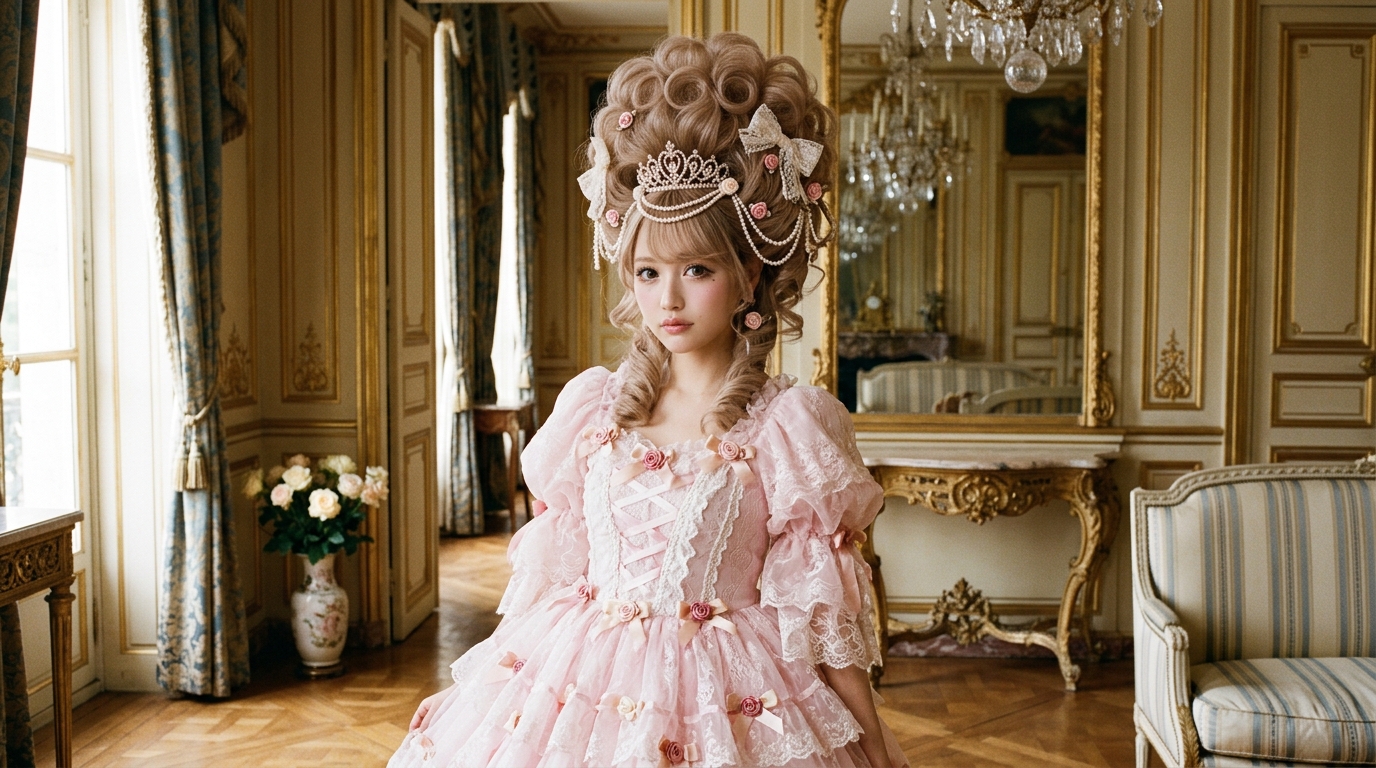
Master voluminous teased hair, streaked chapatsu highlights, bleached blonde extensions, and classic Shibuya sujimori styling.
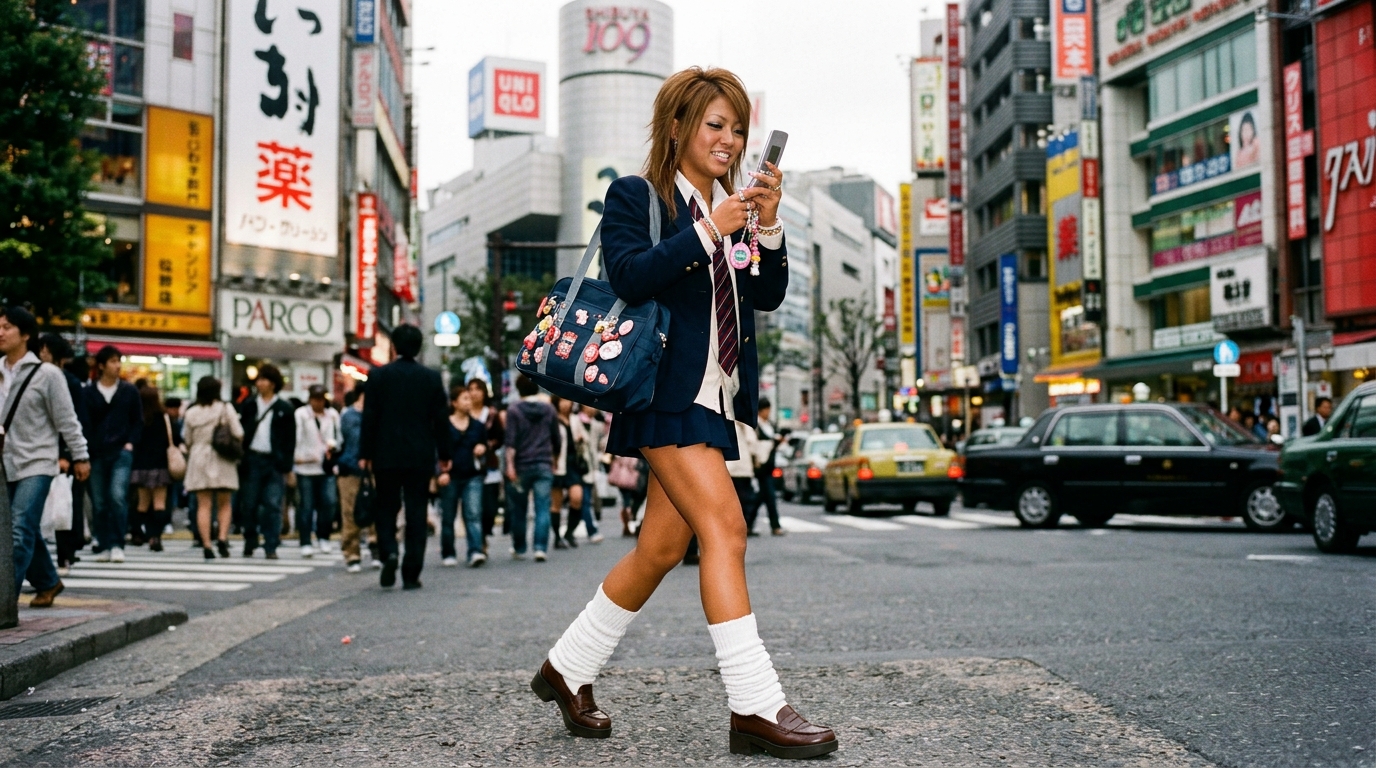
Explore dramatic stiletto acrylics, rhinestones, charms, and decadent 3D nail art essential to authentic Gyaru coordinates.
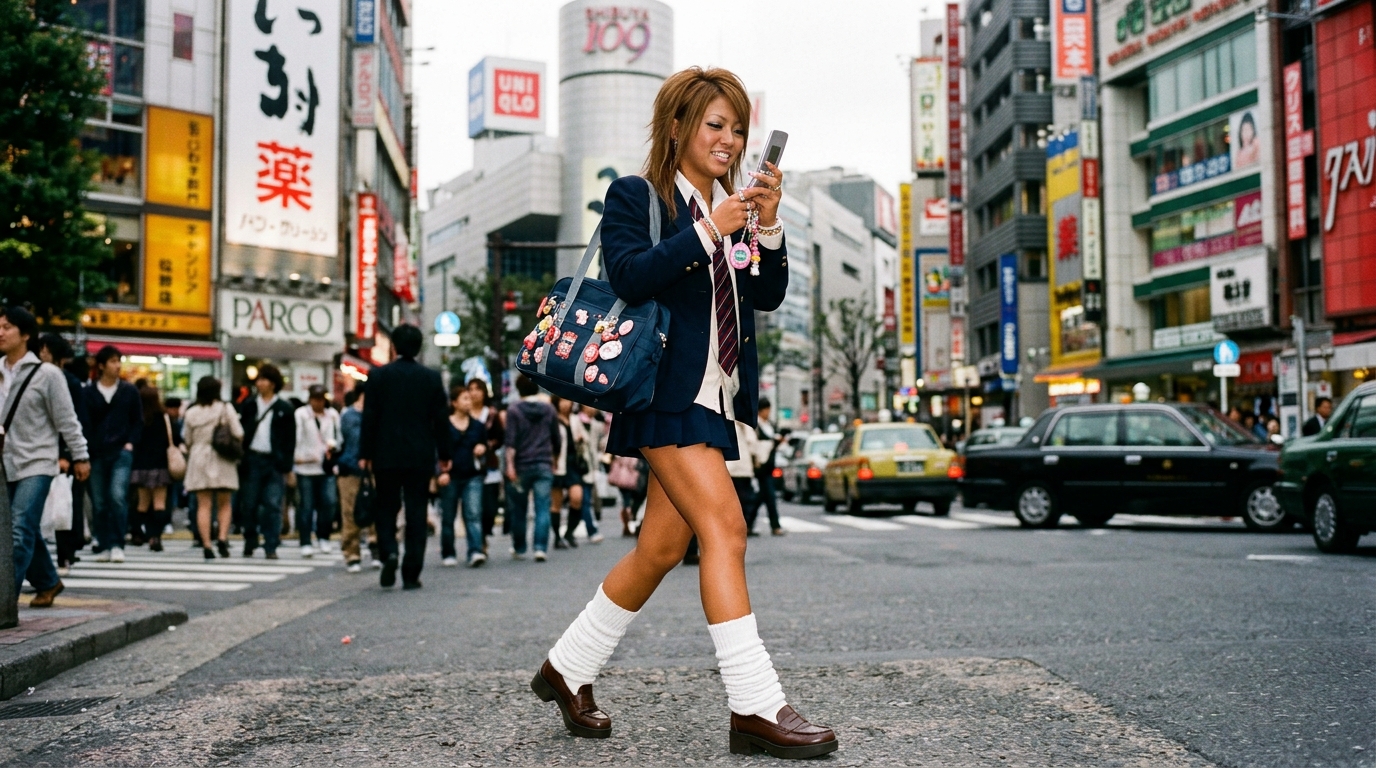
Proportional silhouette rules, essential Shibuya 109 garments, platform boots, statement belts, and 8 substyle blueprints.
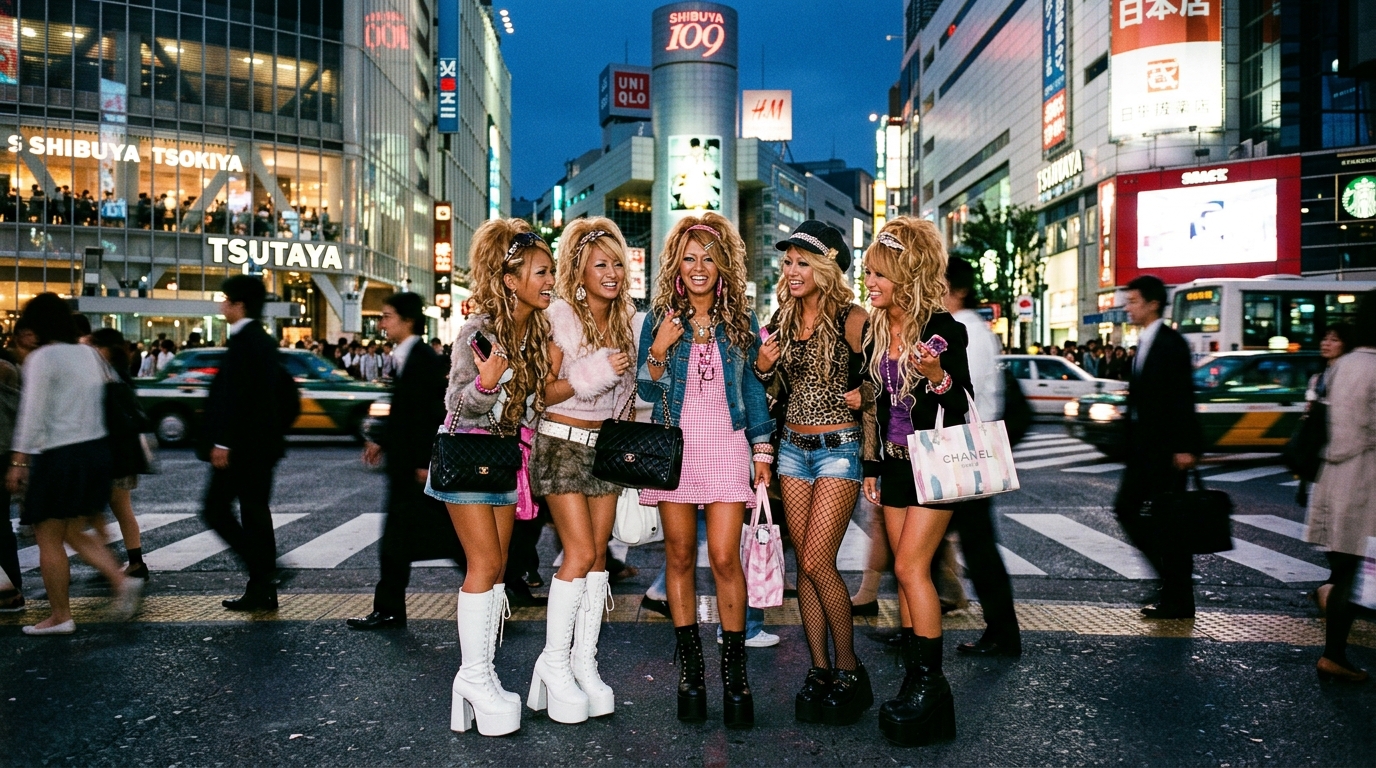
The definitive archival history tracing Kogyaru rebellion, Shibuya 109 golden years, substyle explosions, and modern revival.
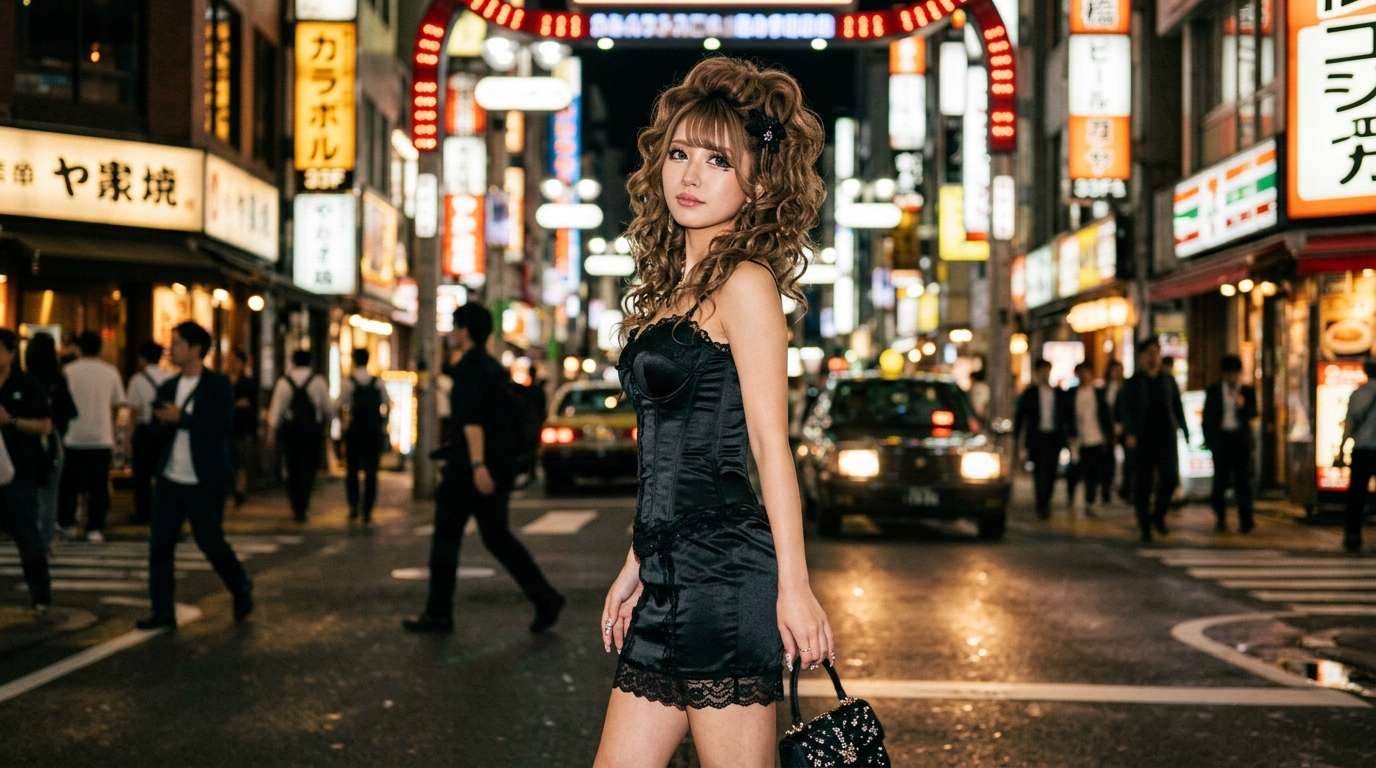
Browse all major Japanese Gyaru substyles with detailed profiles covering aesthetics, key pieces, and origins.
Eye makeup (me-make / 目メイク) is universally recognized as the single most critical element of gyaru makeup. The deliberate combination of precision liquid eyeliner, upper and lower false eyelashes (tsukematsuge), waterline contouring, and optical enlargement defines the authentic gyaru gaze across every historical and modern substyle.
No. While early 1990s Kogyaru and late-1990s Ganguro and Manba celebrated deep ultraviolet tans, countless classic and contemporary substyles—including Hime Gyaru, Himekaji, Onee Gyaru, and modern Reiwa Gyaru—are built on fair, porcelain, or natural skin tones. Gyaru is defined by intentional eye architecture and styling confidence, not melanin.
No. While circle lenses (karakon) became widely popular during the mid-to-late 2000s to expand iris diameter, they are not mandatory. You can achieve dramatic optical enlargement through white waterline pencil, lower lash floating techniques, tear-bag (namida-bukuro) dimensional highlighting, and strategic eyeliner geometry.
False eyelashes (tsukematsuge) are foundational to the signature gyaru silhouette. Because natural mascara alone rarely provides the structural length, density, and outer-corner droop or wing that defines gyaru eye geometry, at least one set of upper lashes—and ideally lower lash clusters—is strongly recommended for an authentic finish.
Tareme (タレ目) translates to "drooping eyes" and sweeps the eyeliner and outer lashes downward and outward past the eye corner to create an innocent, rounded, doll-like gaze. Tsurime (ツリ目) translates to "cat eyes" or "turned-up eyes" and angles the eyeliner and lash line sharply upward toward the temples for a fierce, nocturnal, and sultry allure.
Yes. Gyaru makeup works exceptionally well on monolids (hitoe) and hooded eyelids (oku-futae). Because gyaru eye geometry constructs an expanded external ocular frame using floating eyeliner and false lashes applied slightly beyond the natural lash line, the look does not depend on having a deep natural double eyelid fold.
A beginner kit should prioritize: a jet-black waterproof liquid or gel eyeliner, a pair of fluttery criss-cross upper false lashes, delicate lower lashes, reliable clear lash adhesive, a neutral brown eyeshadow palette, an off-white or champagne pencil for the waterline and tear bag, and a matte contour powder for the nose bridge.
To protect delicate eyelid skin and natural lashes, always saturate a cotton pad with a bi-phase oil-and-water eye makeup remover and press it gently against closed eyes for 20 to 30 seconds to soften the lash adhesive. Never yank false lashes off dry. Follow with a gentle cleansing balm or oil to dissolve waterproof foundation and eyeliner.