Beauty & Makeup
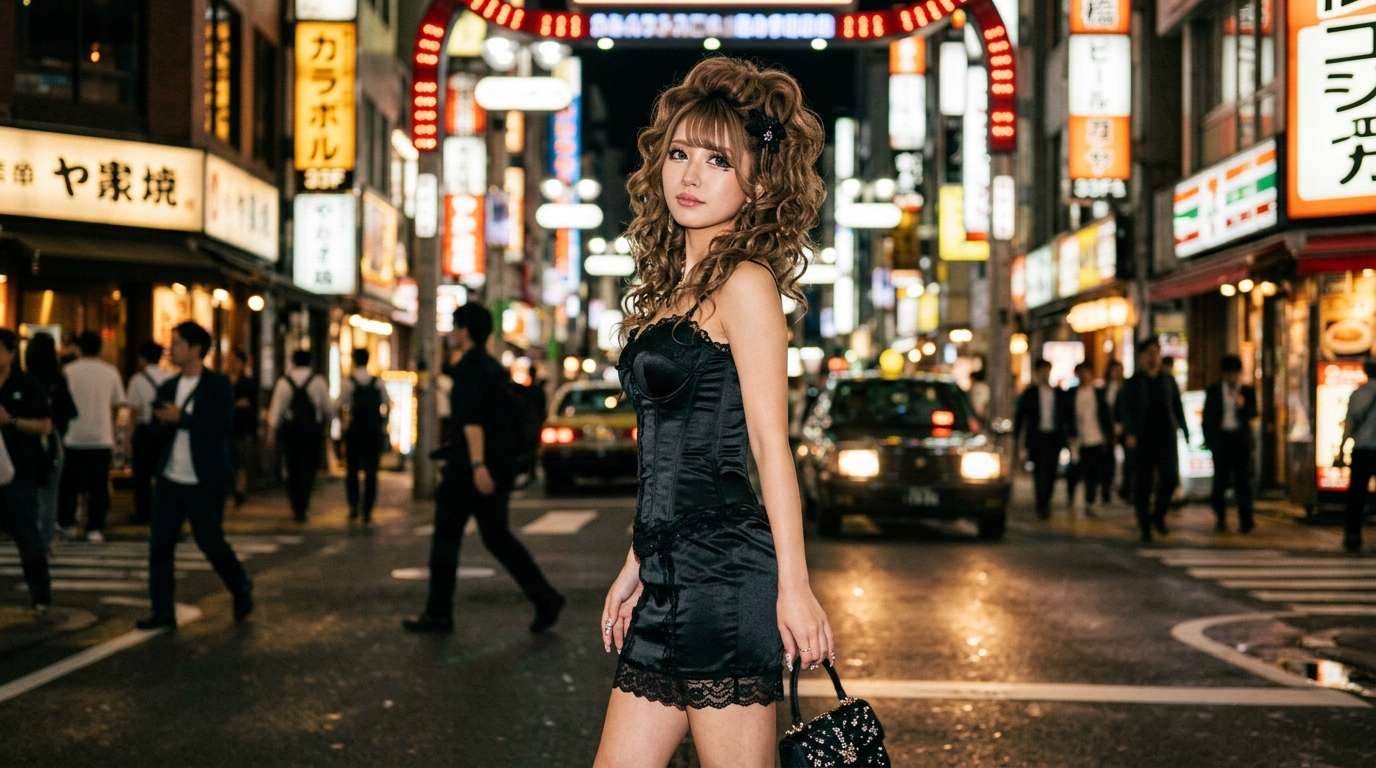
Gyaru Makeup Tutorial: Eyes, Lashes & Styles
Master tareme and tsurime eyeliner geometry, upper and lower false lash stacking, and substyle cosmetic blueprints.
Editorial Guide
Read Guide →
Explore Gyaru hairstyles, including sujimori, curls, teasing, hair colors, extensions and beginner styling ideas for every major substyle.
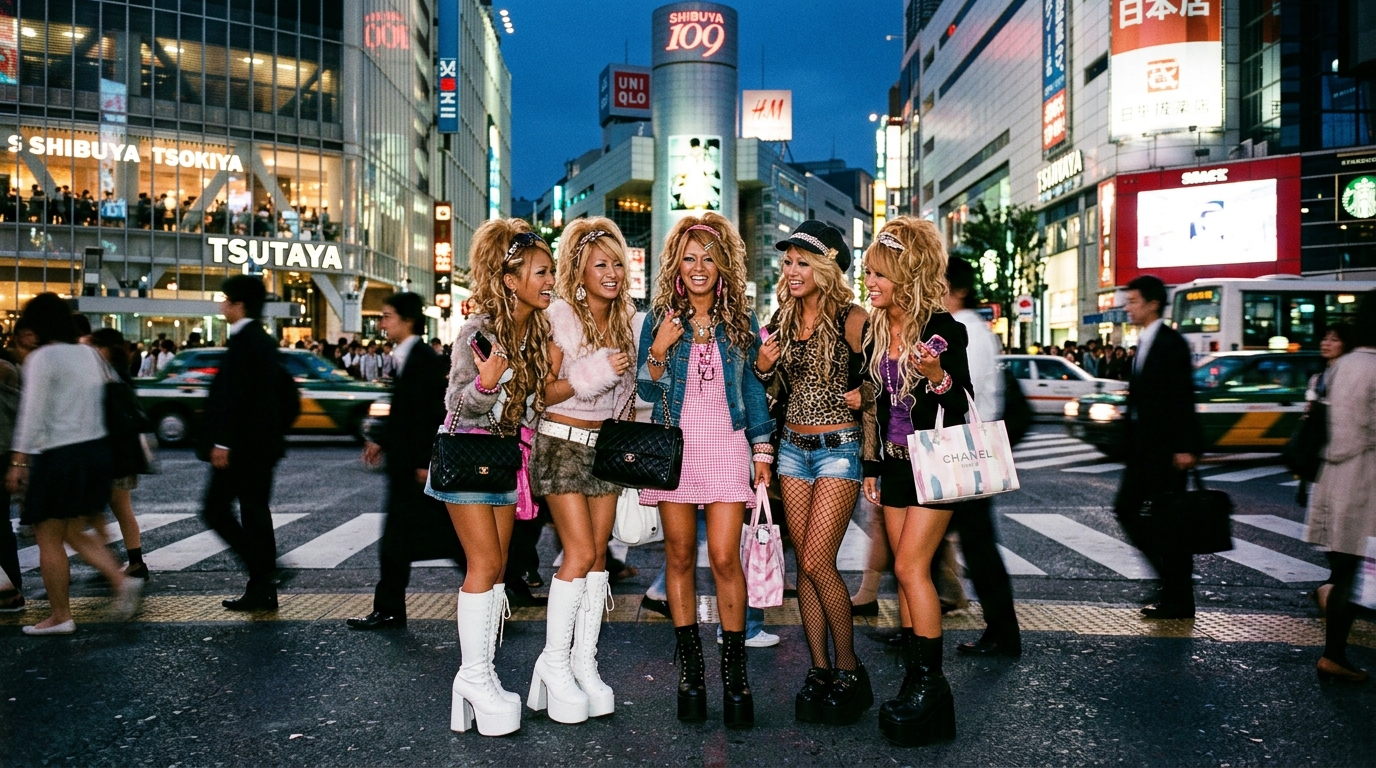
In Japanese street fashion, Gyaru hair (ギャルヘア) is an architectural discipline of volume, shape, and self-expression. Emerging from Tokyo’s trendsetting Shibuya and Harajuku districts in the 1990s, gal hairstyles transformed hair from a compliant frame into a theatrical, sculpted statement. Whether through caramel-toned high school blowouts, towering 2000s sujimori bouffants, or romantic modern waves, gyaru hair has consistently challenged conventional beauty standards across generations.
A common misconception is that "gyaru hair" refers to a single, monolithic haircut—usually envisioned as bleached platinum blonde hair piled into an enormous, sprayed bouffant. In reality, gyaru hair encompasses a broad spectrum of techniques and aesthetics united by one core philosophy: deliberate, intentional styling.
In mainstream fashion, hair is often styled to appear effortless, minimalist, or entirely natural. In contrast, gyaru styling celebrates visible craftsmanship. Every element—from the height of the crown to the direction of an outer curl, the placement of face-framing tendrils, and the choice of hair color—is executed with intention.
Gyaru hairstyles do not exist in isolation. They are designed to harmonize with gyaru eye makeup (me-make), dramatic false eyelashes, sculpted acrylic nails, and coordinated outfits (kōde). A hairstyle is the crown of the total look, providing the proportional visual weight necessary to balance platform boots, layered knitwear, and expressive makeup.
While aesthetics vary widely between subcultures—from beachy Kogyaru to extravagant Hime Gyaru and nightlife-centric Agejo—several key design elements distinguish gyaru styling from conventional curling or Western blowout techniques:
The defining silhouette anchor. Rather than lying flat against the skull, the crown is lifted through backcombing, rollers, or padding to lengthen the head profile and balance facial proportions.
Curls are curled away from the face or alternated in forward-and-backward spirals, then allowed to cool completely before shaping. This preserves spring, definition, and horizontal width.
Deliberately separated strands (okurege, 後れ毛) curve inward around the cheekbones and jawline. This softens the facial perimeter, creates a slimming effect (kogao), and highlights eye makeup.
Bangs are rarely left unstyled. They are curled with a round iron into curved side-swept bangs, piecey see-through bangs, or feathered curtain layers that integrate seamlessly into the sides.
From warm caramel chapatsu to high-contrast bleached highlights and two-tone underlayers, hair color is chosen to create visual texture and movement when curled.
Oversized satin bows, crystal tiaras, hibiscus hair clips, or metallic barrettes are positioned strategically to anchor updos and visually complete the coordinate theme.
Creating long-lasting gyaru volume and curl structure requires specific tools designed to build architecture, hold shape, and minimize heat stress. Below is a beginner-friendly tools and styling products checklist:
For clean, razor-sharp partings and precise teasing at the roots without tangling outer layers.
Keeps hair separated into tidy working tiers so curls can be built systematically from the nape upward.
The classic barrel sizes for bouncy, glamorous Japanese spiral curls without tight ringlet crinkles.
Placed at the crown to set root volume while curls cool, dramatically reducing heat and mechanical damage.
Shields bleached and heat-styled strands from cuticle breakdown, split ends, and moisture loss.
A micro-fine silica dust that adds instant grit and friction to clean roots, anchoring volume without teasing.
Flexible spray for working and brushing; ultra-firm aerosol spray for locking finished silhouettes.
Essential for anchoring half-up styles, securing hidden structural bases, and attaching accessories.
This foundational tutorial walks beginners through creating classic voluminous gyaru curls with an elevated crown and soft face-framing layers. This versatile hairstyle works across casual coordinates (Himekaji) and glamorous evening styles (Agejo).
Start with clean, completely dry hair. Mist a lightweight thermal heat protectant evenly from mid-lengths to ends and comb through with a wide-tooth comb to distribute product. If your hair is fine or struggles to hold a curl, mist a light working setting spray or apply a dime-sized amount of lightweight styling mousse before drying.
Sectioning is the secret to clean, uniform curls. Using your pin tail comb, separate your hair into three horizontal tiers:
Release the top crown section. Take a 2-inch horizontal sub-section across the top back of your crown, hold it straight up, and lightly dust volumizing powder at the roots. Using a fine-tooth teasing comb, gently stroke downward two to three times toward the scalp on the underside of the section. If you prefer to avoid teasing, wrap this warm section around a 2-inch thermal velcro roller and pin it in place to set while you curl the lower tiers.
Begin curling the bottom and middle tiers using a 32mm or 38mm curling iron heated to an appropriate temperature (around 160°C–180°C / 320°F–355°F):
Release your bangs and the two face-framing strands (okurege) flanking your ears. Clamp your curling iron around the fringe, curve it slightly inward, and sweep it horizontally toward your preferred side. For the side tendrils, curl them inward toward your jawline so they cradle your cheekbones, instantly softening your face shape and accenting your eyeliner.
Once every curl is 100% cool to the touch, tilt your head slightly back and gently rake your fingers or a wide-tooth comb through the mid-lengths. Do not use a fine brush, which can turn defined curls into frizzy fuzz. Lightly smooth the outer canopy over your backcombed crown to conceal the teasing underneath.
Position your chosen accessory—such as a side rhinestone barrette, a floral clip above the ear, or a velvet bow at the base of the crown. Finish with a generous mist of fine, firm-hold aerosol hairspray held 10 inches away to seal the hairstyle against humidity and wind.
Achieving authentic gyaru curls requires understanding curl mechanics. Unlike modern beach waves—which leave the ends flat and straight—gyaru curls are curled through to the very tips, creating a lush, bouncy, and rounded bottom silhouette.
While face-framing tendrils should always curl away from the face, alternating forward and backward curls throughout the back layers prevents sections from bunching together into one solid clump, producing multi-dimensional volume.
If your hair is resistant to curls, immediately pin each freshly rolled curl to your scalp using a metal duckbill clip. Allow all pin curls to cool for 15 minutes while applying makeup, then release for dramatic, red-carpet bounce.
Overnight satin heatless curl ribbons, flexible foam rollers, or jumbo velcro rollers offer healthy, zero-heat alternatives for creating large gyaru-style waves while preserving hair moisture and cuticle integrity.
Sujimori (筋盛り, combining suji meaning "line/streak" and mori meaning "pile/swelling") is the architectural pinnacle of mid-to-late 2000s gyaru styling. Popularized through hostesses, models in Koakuma Ageha magazine, and Shibuya salon stylists, sujimori elevated hairstyling into dramatic structural art.
True sujimori is visually defined by two distinct components:
You do not need waist-length hair to wear authentic gyaru styles. Adapt the core principles of volume, curvature, and accessory framing to your natural length:
| Hair Length | Suitable Styles | Volume Method | Curl Approach | Helpful Accessories | Difficulty |
|---|---|---|---|---|---|
| Short Hair | Layered shag bobs, flicked ends, half-up mini crown | Crown root lift powder, texturizing wax | 25mm iron, outer flicks, curved bangs | Barrettes, headbands, hair clips | Beginner |
| Medium Hair | Half-up bouffant, side ponytails, loose spiral curls | Light backcombing, velcro rollers at crown | 32mm barrel curls, inward face-framers | Satin ribbons, floral pins, side clips | Intermediate |
| Long Hair | Towering updos, sujimori cascades, twin tails | Deep teasing, foam donuts (sukige), hair wefts | 32mm–38mm full-length spirals | Tiaras, oversized velvet bows, chains | Advanced |
Short hair—such as a chin-length bob or textured pixie cut—can look strikingly gyaru by emphasizing crown texture and flipped-out ends. Style your bangs with a rounded iron, texturize the crown using a matte styling wax, and flick the ends of your layers upward and outward. Incorporating leopard-print headbands, colorful resin hair clips, or optional synthetic clip-in ponytails allows short-haired gals to experiment with versatile silhouettes.
Collarbone to shoulder-length hair is ideal for everyday gyaru styling. The quintessential medium style is the Half-Up Crown Bouffant: gather the top third of your hair, tease the roots lightly for height, secure it with a clear elastic at the crown, and curl the remaining bottom layers into cascading 32mm spirals.
Long hair offers maximum architectural canvas for grand silhouettes: towering high ponytails with curled tails, high twin tails (popularized in classic Popteen styling), and formal pinned updos. When curling long hair, divide sections into manageable halves to ensure heat penetrates evenly from root to tip.
Browse 16 iconic gyaru hairstyle ideas across classic, substyle-specific, and modern street aesthetics:
Bouncy 32mm spiral curls brushed out into soft waves with light crown elevation and side-parted bangs.
Curved fringe swept dramatically across the forehead, anchored by inward-curling face tendrils.
Deeply teased crown canopy smoothed over the surface, transitioning into cascading barrel waves.
Top half pinned into a high bouffant with an oversized bow, lower half styled into ringlet cascades.
Dramatic side part with towering root lift, descending into sleek, high-gloss spiral waves.
Formal salon updo with structural foam padding and individually separated, hard-lacquered curl streaks.
Sleek base tied at the crown with backcombed, voluminous curls fanning out from the ponytail base.
Playful asymmetric ponytail tied high above one ear, curled into a dense waterfall of tendrils.
High dual pigtails with backcombed roots and buoyant spiral curls framing both sides of the face.
Glossy straight blowout with heavily tapered razor layers curved gently inward at the ends.
Choppy, piecey bob with teased crown volume and playful flipped-out winged ends.
Mid-height ponytail with honey-brown chapatsu color, wispy bangs, and signature loose face tendrils.
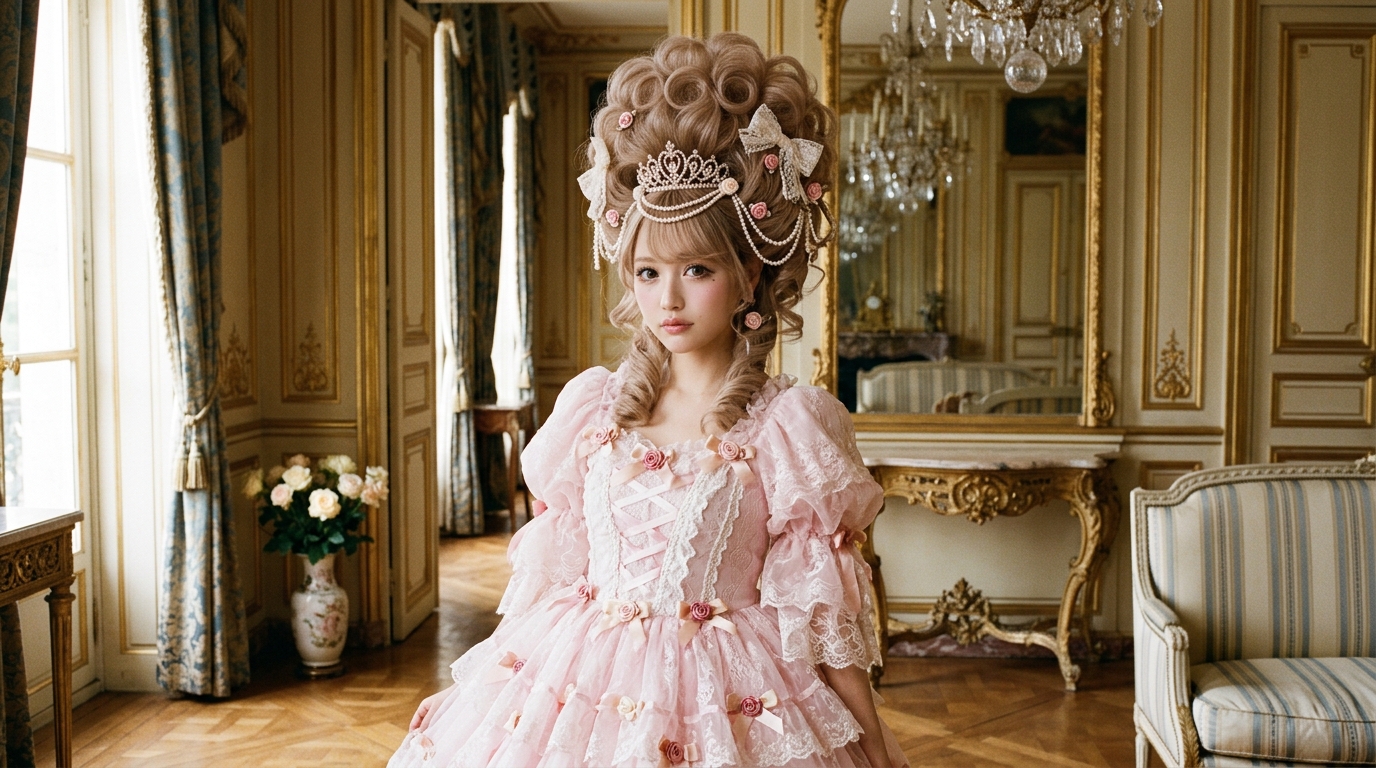
Elaborately pinned crown chignon adorned with lace headpieces, pearl strands, and drop curls.
Heavily razor-layered dark or two-tone hair with spiky textured crown volume and jagged bangs.
High-bleach platinum or neon hair with frizzy volume, tropical hibiscus clips, or beaded wraps.
Airy, touchable barrel waves with subtle root lift, curtain fringe, and glossy healthy texture.
Hairstyles are closely tied to individual substyle codes. Explore the specific hair architecture of every major gyaru movement:
In Japan, naturally dark hair was historically considered the universal social baseline for students and corporate employees. The practice of chapatsu (茶髪, tea-colored hair)—bleaching or dyeing hair to warm chestnut, caramel, copper, or golden hues—became deeply intertwined with youth street fashion in Shibuya. Rather than following rigid dress codes, young people used color to customize their visual presence.
Throughout the subculture's development, color palettes evolved to serve distinct stylistic functions:
In 2000s Tokyo, hair salons specializing in gyaru styling (such as ISM and GLAMOROUS) were famous for installing full heads of synthetic and human hair extensions. Extensions served two distinct architectural purposes:
Are extensions required today? Absolutely not. Modern gyaru frequently utilize lightweight clip-in ponytail falls, halo wefts, or simply style their natural length. When wearing hairpieces, always ensure clips do not pull tightly on fragile scalp edges to avoid traction alopecia.
Accessories are not decorative afterthoughts; they anchor the coordinate. Choose accessories calibrated to your specific aesthetic:
The evolution of gyaru hair across three decades illustrates how changing lifestyle norms and salon techniques reshaped the aesthetic without losing its core rebellious spirit:
| Styling Dimension | 1990s Shibuya Origin | 2000s Golden Era | Reiwa Modern Era |
|---|---|---|---|
| Silhouette & Volume | Airy, natural high-school bounce; playful flipped ends | Towering architectural bouffants; sujimori crown padding | Soft root elevation; relaxed, touchable bounce |
| Curl Definition | Soft loose waves or straightened blowouts | Hard-lacquered spiral ribbons and defined curl streaks | Brushed-out 38mm barrel waves; Korean-style bends |
| Hair Color Focus | Warm chapatsu browns; initial brassy bleach-outs | Platinum blonde, milk tea, high-contrast chunky streaks | Ash beige, peekaboo highlights, healthy glossy tones |
| Extensions & Padding | Minimal; primarily styled on natural high school hair | Heavy salon wefts, foam donuts (sukige), synthetic falls | Lightweight clip-in pieces, natural length preservation |
| Media Influence | Egg magazine, Shibuya 109 street snaps | Koakuma Ageha, Popteen, salon catalogs | Social media, archival revivals, TikTok tutorials |
Frequent heat styling, backcombing, and chemical lightening can compromise hair health if performed without protective measures. Follow these practical cosmetic maintenance guidelines:
Avoid these ten common beginner pitfalls when styling gyaru hair:
Curling the bottom lengths while leaving the crown completely flat creates a bottom-heavy triangle shape rather than a balanced, lifted gyaru silhouette. Always elevate the crown first.
Touching, raking, or brushing warm curls causes them to collapse immediately. Always allow curls to cool 100% to room temperature before manipulating them.
Dyeing hair blonde without deliberate styling, curl structure, or crown shape does not read as gyaru. Styling technique dictates the aesthetic far more than hair color alone.
Teasing aimlessly without smoothing a clean outer canopy over the tangled roots results in messy frizz rather than sculpted crown height.
Spraying hard-hold hairspray on warm hair makes it stiff, sticky, and difficult to brush. Use flexible working spray during styling and reserve strong aerosol lacquer for the final set.
Pulling all hair strictly back into an updo without leaving soft side strands around the temples and jawline eliminates the softening, face-slimming effect essential to gal aesthetics.
Pairing a sweet pastel Himekaji dress with spiky punk Rokku hair or extreme Ganguro beach accessories creates aesthetic clash rather than intentional coordination.
Believing that every gyaru coordinate requires a formal, lacquered sujimori updo is inaccurate. Most day-to-day gyaru wear simple, bouncy barrel waves or half-up styles.
Trying to recreate magazine-cover Agejo bouffants using only fine, natural hair will lead to disappointment. Elaborate salon updos almost always rely on hidden foam padding (sukige).
Regularly using high-temperature curling irons without heat protectant leads to split ends, broken crowns, and dull texture. Protect your hair cuticles before every styling session.
Hair is one pillar of the total Gyaru aesthetic. Learn how makeup, manicures, silhouettes, and substyle histories interconnect.
Master tareme and tsurime eyeliner geometry, upper and lower false lash stacking, and substyle cosmetic blueprints.
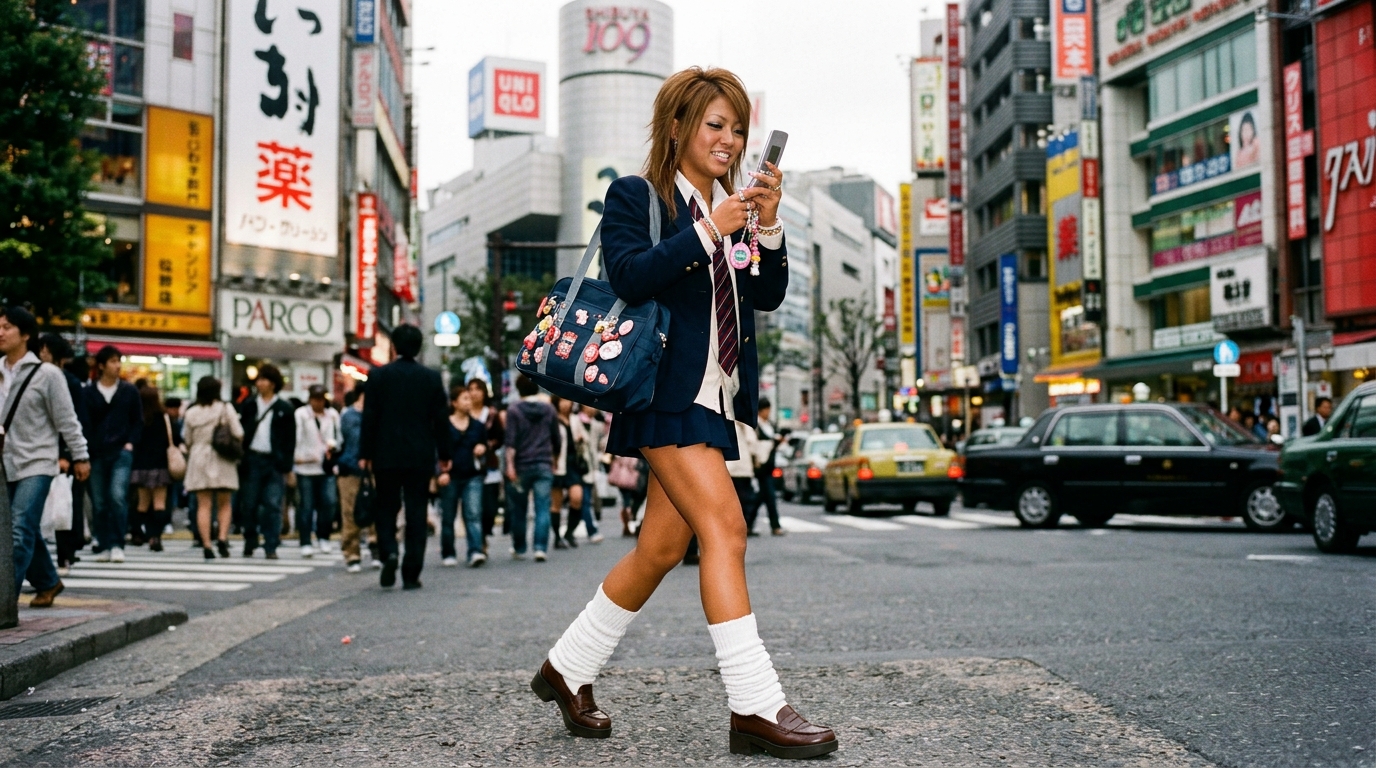
Explore dramatic stiletto acrylics, Swarovski crystals, charms, and decadent 3D nail art essential to authentic Gyaru coordinates.
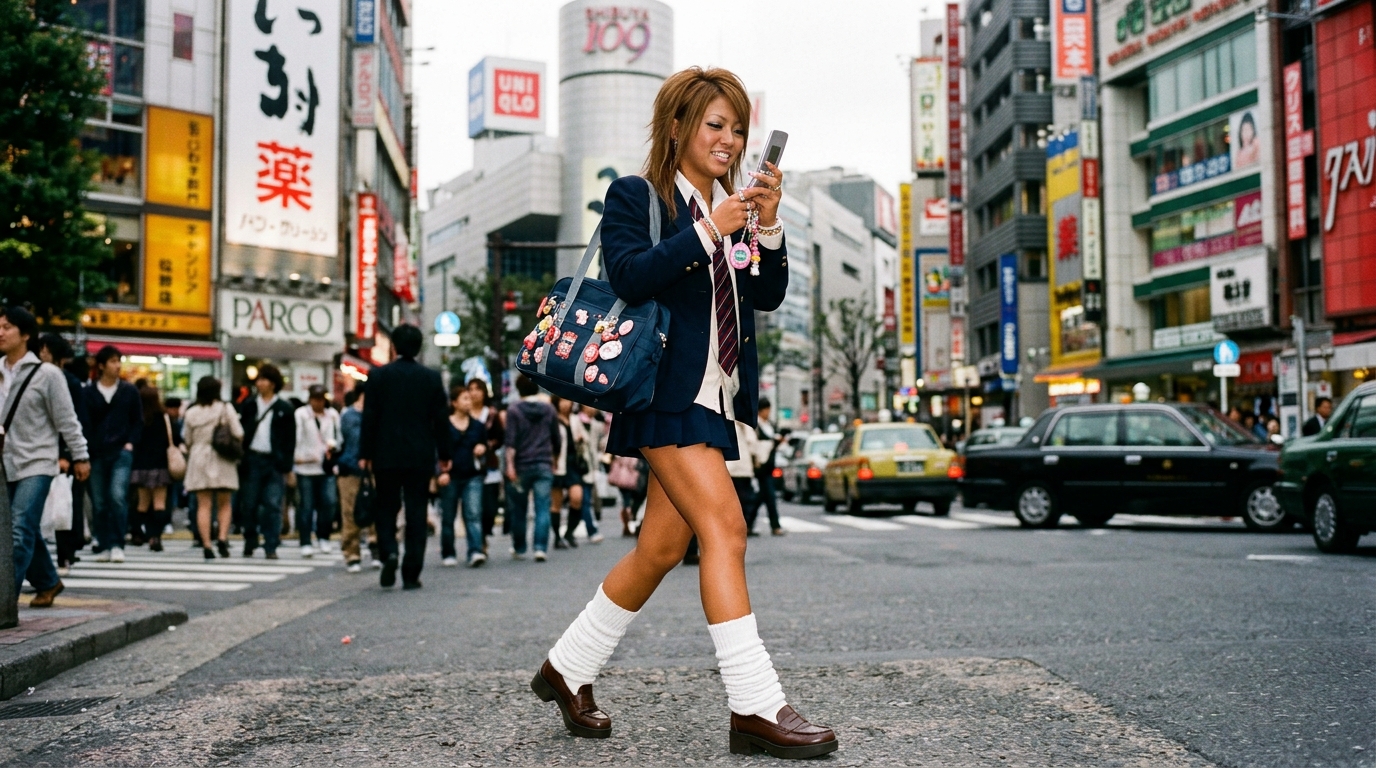
Proportional silhouette laws, Shibuya 109 cornerstone garments, platform boots, statement belts, and 8 substyle blueprints.
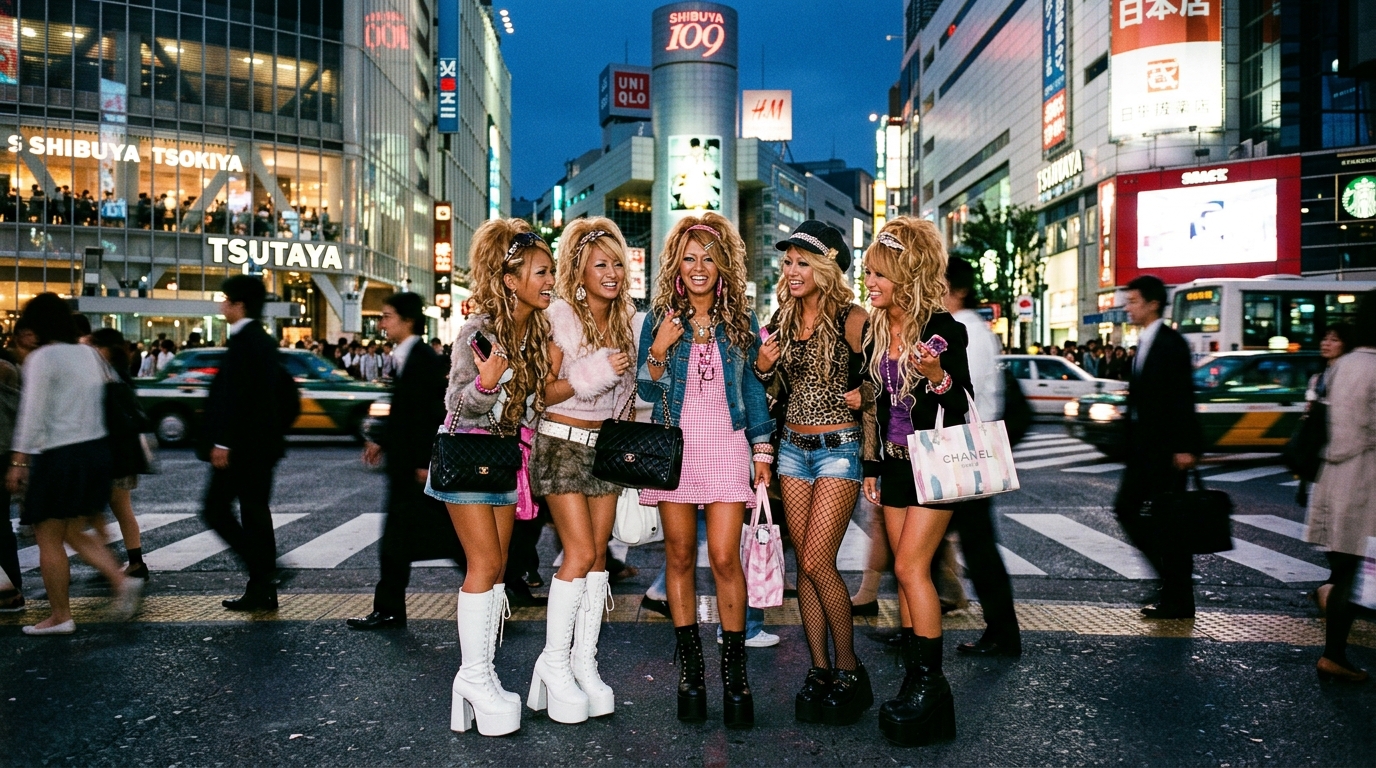
The definitive archival history tracing Kogyaru rebellion, Shibuya 109 golden years, substyle explosions, and modern revival.
The complete cultural overview of Japanese Gyaru fashion, foundational aesthetics, iconic Shibuya landmarks, and philosophy.
Browse all major Japanese Gyaru substyles with detailed profiles covering aesthetics, key pieces, and origins.
Gyaru hair refers to the expressive, intentionally sculpted hairstyles developed within Japanese gal subculture. Rather than a single rigid haircut, it represents an approach defined by deliberate crown volume, textured waves or defined curls, face-framing layers, dimensional hair color (such as chapatsu brown or blonde), and accessories coordinated with an outfit.
Sujimori (筋盛り, literally "streak/line volume") is an architectural styling discipline that peaked during the 2000s in magazines like Koakuma Ageha. It features a high, backcombed crown—frequently built over foam padding (sukige)—contrasted with individual, lacquered curl tendrils separated into distinct visual ribbons.
No. While bleached blonde hair was prominent in late-1990s Kogyaru, Ganguro, and 2000s Agejo, millions of Gyaru styled their hair in warm chestnut, caramel, honey, copper, chocolate brown (chapatsu), or natural dark shades—particularly within Onee Gyaru, Rokku Gyaru, and contemporary Reiwa styling.
Yes. Dark or naturally black hair looks distinctly Gyaru when styled with signature silhouette elements: high crown root volume, side-swept bangs, piecey face-framing tendrils, dimensional barrel curls, or iconic accessories like rhinestone clips, bows, or animal-print headbands.
Yes. Layered bobs, textured shag cuts, flicked-out ends, voluminous crown styling, and asymmetric side parts can all create an authentic Gyaru silhouette on short hair. Accessories such as barrettes, headbands, or clip-in pony extensions also add versatility.
No. Hair extensions (wefts, tape-ins, clip-ins, or partial falls) are popular for achieving extreme length and density in substyles like Agejo or Hime Gyaru, but they are entirely optional. Natural medium and short hair can easily achieve authentic Gyaru volume and texture on its own.
The easiest entry point is the "Half-Up Crown Volume" or "Loose Barrel Waves with Face-Framing Tendrils." It requires only basic crown backcombing, a 32mm curling wand, light hairspray, and a bow or decorative clip to anchor the silhouette.
Chapatsu (茶髪, literally "tea hair") refers to naturally dark Japanese hair bleached or dyed to brown, caramel, or reddish-brown tones. Beginning in the 1990s, chapatsu became widely associated with Japanese youth fashion and challenged established school, workplace, and beauty conventions.
You can build durable volume without intense backcombing by applying volumizing mousse to damp roots, blow-drying hair upside down, using large thermal velcro rollers along the crown while the hair cools, and lightly dusting a silica-based root volume powder at the crown.
Never pull a comb forcefully from roots to ends through dry teased hair. First, apply a generous amount of hair oil, leave-in conditioner, or silicone serum directly to the knotted sections. Then, use a wide-tooth comb or soft bristle brush to gently detangle from the very ends upward in small sections.
Hime Gyaru ("Princess Gal") is characterized by grand, doll-like silhouettes: towering high-volume crowns, elaborate half-up cascades of spiraled curls, high twin tails, or formal curled updos, embellished with oversized velvet bows, pearls, floral headpieces, or mini tiaras.
Traditional 1990s and 2000s Gyaru hair focused on theatrical, structural silhouettes: extreme backcombing, heavy sujimori lacquer, full bleach-outs, and dense synthetic wefts. Modern Reiwa Gyaru hair favors touchable, effortless volume, softer natural curl definition, healthy hair maintenance, and lightweight clip-in pieces.