Ganguro Fashion: Deep Tan, White Makeup & Late-90s Radicalism
Explore Ganguro fashion: the extreme late-1990s Gyaru substyle featuring deep salon tans, white eye concealer, bleached hair, and Shibuya rebellion.
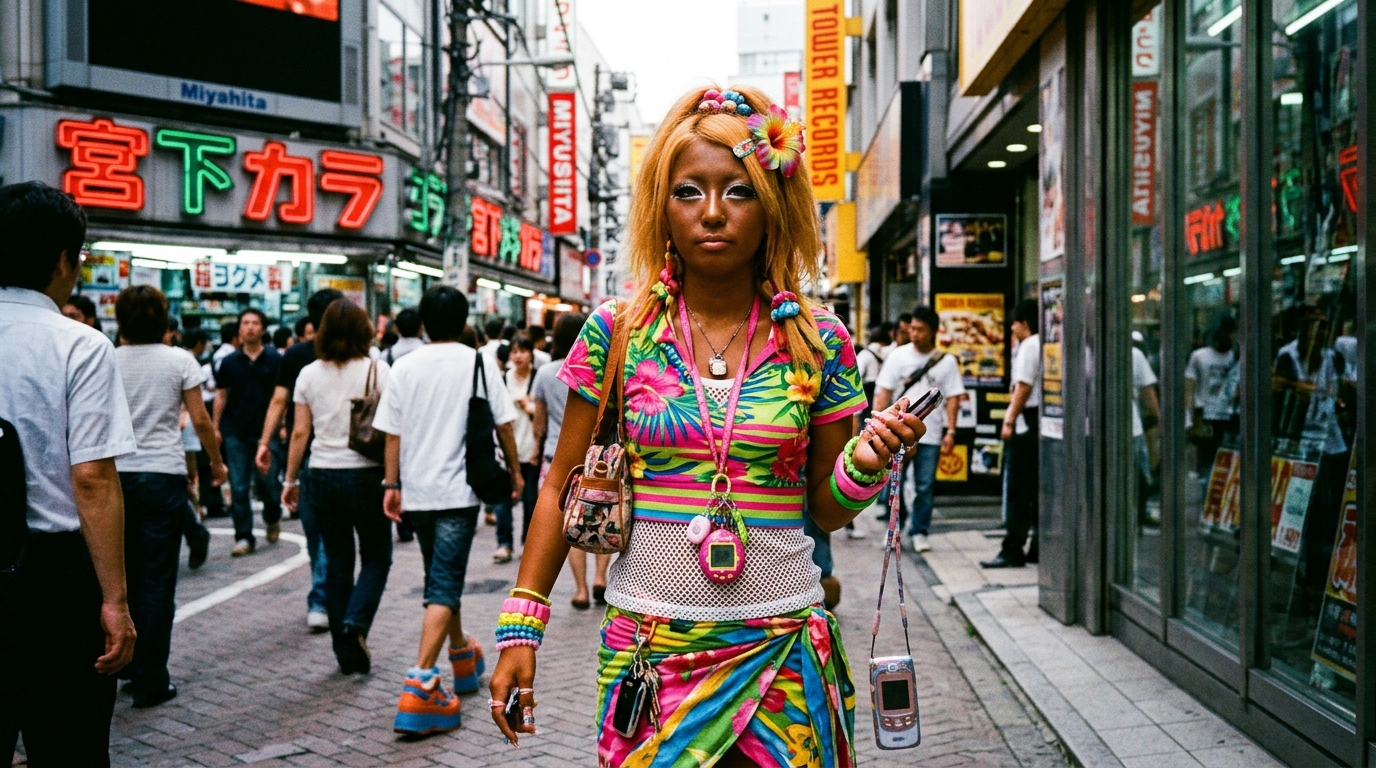
Ganguro (ガングロ)
- • Deep, artificial golden-brown to dark bronze tans maintained at tanning salons
- • Stark white concealer applied across the eyelid crease and straight down the nose bridge
- • Platinum bleached blonde, orange, or silver-toned synthetic hair
- • Bright tropical, Hawaiian-print resort wear and hibiscus flower motifs
- • Platform platform sandals and boots reaching heights of 10 to 15 centimeters
- • ALBA ROSA oversized hibiscus print logo blankets and coats
- • Bright floral sundresses and tropical sarongs
- • Extreme high platform boots and foam cork wedge sandals
- • Flower hairclips and metallic bead necklaces
- • Ultra-deep foundation or tanning oil layered over dark bronze skin
- • Bright white matte liquid concealer applied over eyelids and along the nasal bone
- • Black liquid eyeliner with dramatic winged corners and prominent false lashes
- • Frosted pearl or pure white lipstick
- • Heavily bleached platinum blonde, neon orange, or silvery white shades
- • Straightened layers or textured volume adorned with tropical flower clips
The Extreme Frontier of Japanese Street Style
If Kogyaru challenged school authority in the classroom, Ganguro took that rebellion and amplified it into the realm of shock art on the streets of Shibuya. Emerging around 1997 and peaking between 1998 and 2000, Ganguro pushed every Gyaru characteristic to its logical, uncompromising extreme.
Traditional Japanese beauty conventions had spent centuries celebrating porcelain white skin (bihaku), silky black hair, and quiet modesty as the ideals of respectable womanhood.
Ganguro was an aggressive, public demolition of that standard. Ganguro gals spent hours inside UV tanning beds each week, bleached their hair to platinum blonde or electric orange, and painted stark, chalk-white makeup across their faces to maximize contrast with their darkened skin.
Visual Anatomy of Ganguro Makeup
The Ganguro face is instantly recognizable for its bold use of chiaroscuro—stark light against deep dark:
1. The Deep Tan & White Highlights
Practitioners cultivated deep tans at specialized tanning salons across Tokyo, often referred to colloquially as yake-gyaru (baked gals). Over this bronze canvas, they applied pure white matte liquid concealer:
- The Nose Line: A straight, sharp stripe drawn down the nasal bridge from forehead to tip.
- The Eye Crease: Bright white pigment swept across the entire lid and brow bone.
2. High-Impact Eye Architecture
Surrounding the white highlights was intense black liquid eyeliner outlining the entire eye contour, paired with thick false eyelashes (tsukematsuge). The stark white against pitch-black liner against bronze skin created a visual shock that commanded immediate attention.
3. Frosted Lips
To complete the contrast, lips were coated in pale frosted beige, pearlescent pink, or stark white lipstick, entirely eschewing natural pinks or reds.
The ALBA ROSA Phenomenon
In the late 1990s, the undisputed luxury symbol of Ganguro fashion was ALBA ROSA, a resort-wear brand located on the third floor of Shibuya 109. Its signature design featured a stylized hibiscus flower and bold, oversized block lettering.
The brand’s reversible woolen blankets, cardigans, and coats—often costing hundreds of dollars—became prized status symbols among high school and street gals, cemented into subculture immortality through the pages of egg magazine.
Sociological Context: Anti-Bihaku Rebellion
Ganguro’s radical complexion and makeup choices frequently spark questions today about cultural context. Academic research by sociologists such as Dr. Laura Miller clarifies that Ganguro was an internal domestic rebellion against traditional Japanese bihaku (porcelain skin) ideals, combined with surf culture and admiration for Okinawan pop idol Namie Amuro.
For a comprehensive analysis of the origins of Gyaru tanning and contemporary discourse, read our detailed investigation: Is Gyaru Cultural Appropriation? History, Tanning & Context.
Frequently Asked Questions About Ganguro
What does the word Ganguro mean?
Ganguro (ガングロ) is widely derived from the phrase ganguro (顔黒, literally 'black face' or 'dark-faced') or gan-gan-kuro (ガンガン黒, 'intensely black/dark'), referencing the extreme deep tans worn by practitioners.
How does Ganguro differ from Manba?
Ganguro represented the late-90s foundation featuring white makeup focused on the upper eyelids, nose bridge, and lips. Manba, emerging in the early-to-mid 2000s, took the aesthetic to an even more extreme level by painting circular white rings around the entire eye socket ('panda eyes'), wearing neon sticker decorations, and using even darker tans.
Sora Tanaka
Lead Fashion Archivist & J-Fashion ResearcherSpecializing in Heisei-era Tokyo street subcultures, Shibuya 109 commercial design history, and physical print magazine preservation. All articles are cross-referenced with primary historical print issues of egg, Koakuma Ageha, and academic fashion collections.
Further Reading & Related Styles
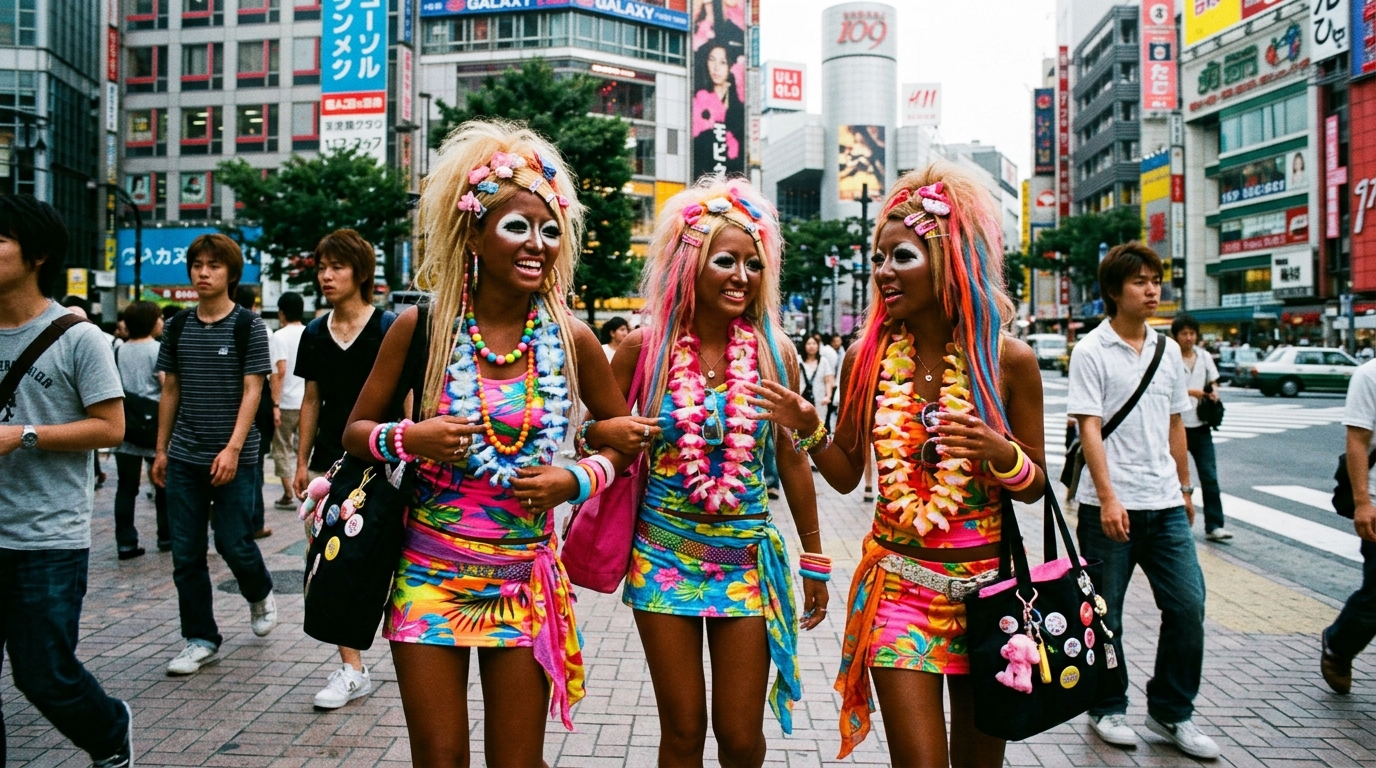
Manba & Yamanba: History, Makeup & Extreme Gyaru Evolution
Explore Manba and Yamanba Gyaru: delve into the extreme dark tan substyle, circular white panda eye makeup, ALBA ROSA coats, and Eurobeat culture.
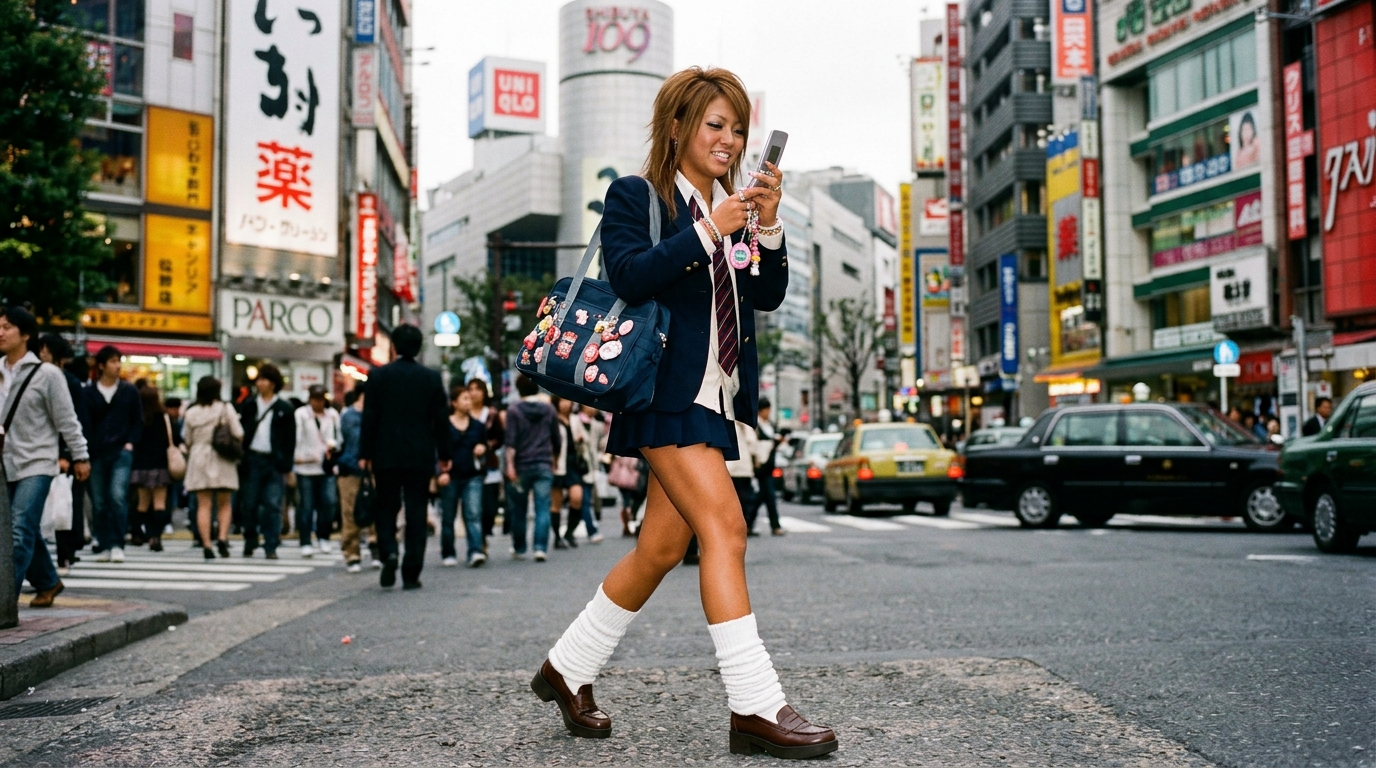
Kogyaru Fashion: History, Loose Socks & High School Gyaru
The historical guide to Kogyaru (Kogal) fashion: how 1990s Japanese high schoolers subverted school uniforms with loose socks, platform boots, and Shibuya street culture.
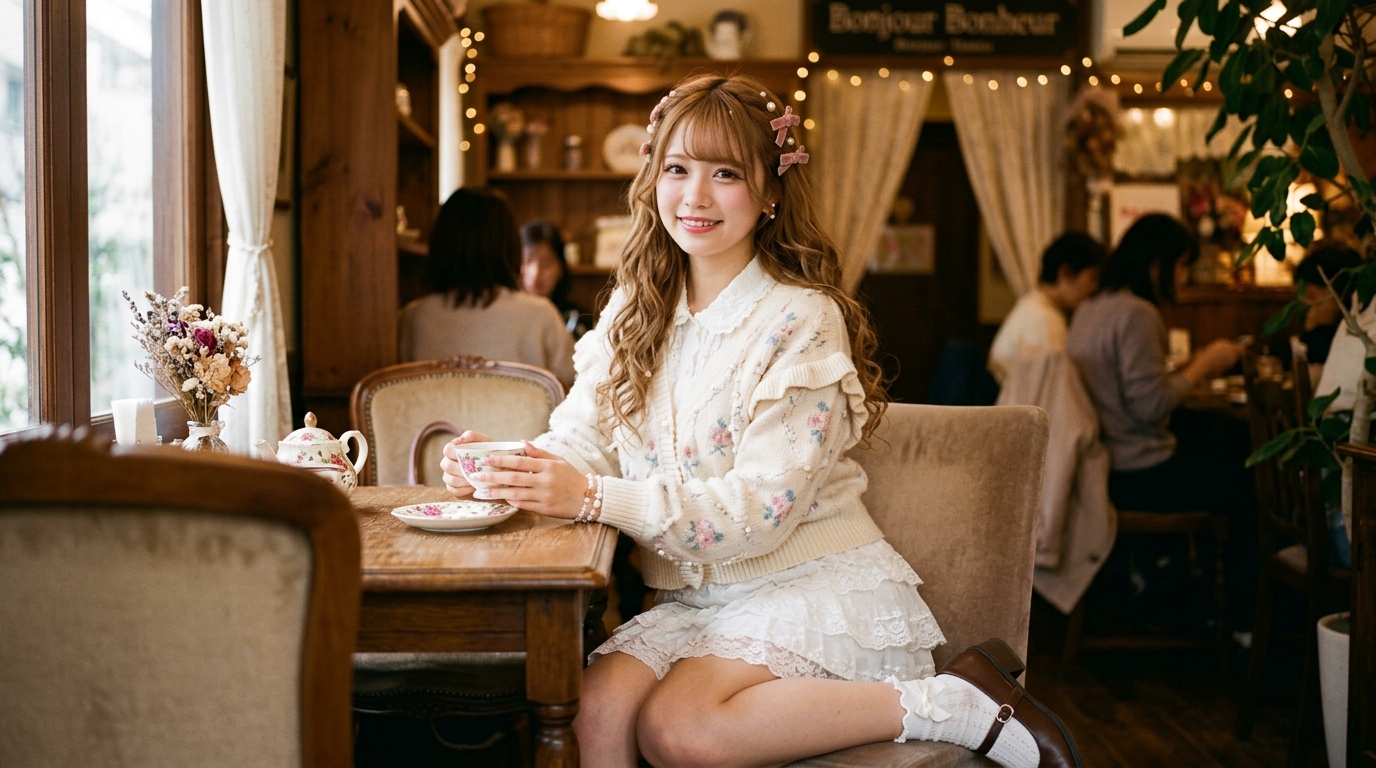
Himekaji: Casual Princess Gyaru Outfits, Liz Lisa & Romance
An overview of Himekaji (Casual Princess Gal): explore soft floral prints, Liz Lisa styling, cozy knitwear, and everyday romantic Japanese street fashion.